I am interested in the connections between affect, emotion, and intimacy, particularly as they manifest in media and popular cultures. One thread of inquiry is, for instance, to employ theories of affect and emotion heavily influenced by Sara Ahmed and Lauren Berlant to examine media and popular cultural texts, including film and television, as well as cultural practices, such as urban transport.
Publications in this area are:
Ho, Michelle H. S. 2020. “Affect: Nishihara Satsuki” in Japanese Media and Popular Culture: An Open-Access Digital Initiative of the University of Tokyo, edited by Jason G. Karlin, Patrick W. Galbraith, and Shunsuke Nozawa. https://jmpc-utokyo.com/keyword/affect/
Ho, Michelle H. S. 2018. “Housewives Watching Crime: Mediating Social Identity and Voyeuristic Pleasures in Japanese Wide Shows,” in Routledge Handbook of Japanese Media, edited by Fabienne Darling-Wolf, 213-227. New York: Routledge.
Ho, Michelle H. S. 2017. “Consuming Women in Blackface: Racialized Affect and Transnational Femininity in Japanese Advertising,” in Japanese Studies 37(1): 49-69.
(The advertisements I have used but were refused print permissions can be downloaded here)
Ho, Michelle H. S. 2015. “Desiring the Singapore Story: Affective Attachments and National Identities in Anthony Chen’s Ilo Ilo,” in Journal of Chinese Cinemas 9(2): 173-186.
One thread of inquiry is to trace digital intimacies among human beings, such as on social media, as well as human-non-human intimacies, such as between humans and robots, virtual assistants, and virtual characters.
Gender, Intimacy, and Emerging Digital Technologies in Contemporary Japan (GIED)
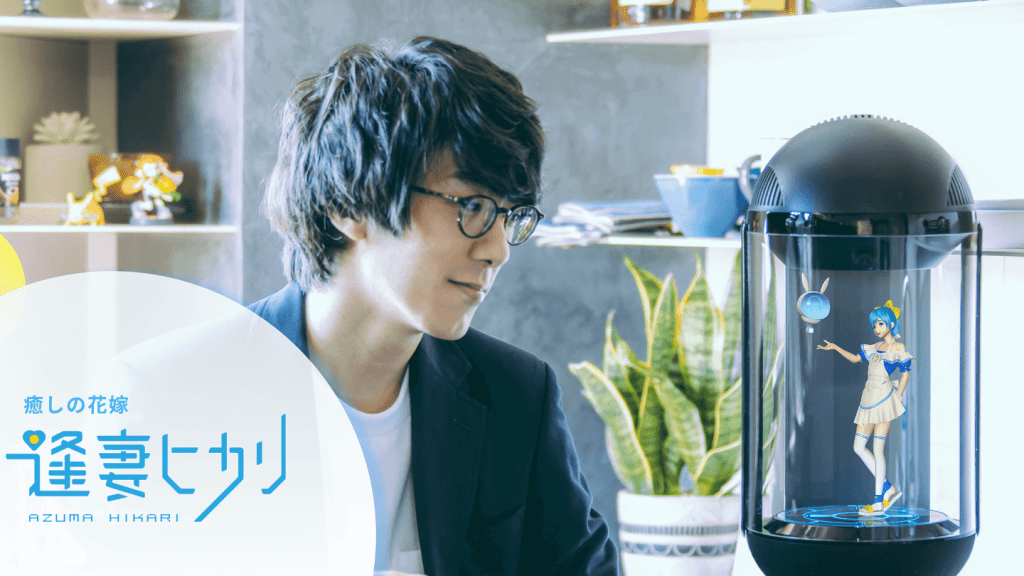
Since 2019, I have been collaborating with Dr. Hiromi Tanaka (Meiji University) and Dr. Patrick W. Galbraith (Senshu University) on a project called “Gender, Intimacy, and Emerging Digital Technologies in Contemporary Japan (GIED).” Our project explores how humans interact with technologies like robots, virtual assistants, and virtual characters through a focus on gender, sexuality, and digital intimacies.
Ongoing talks and presentations on this are:
Ho, Michelle H. S. and Hiromi Tanaka. 2023. “Azuma Hikari, My Healing Bride: Tracing Gender and Human-Machine Intimacies in Contemporary Japan.” International Communication Association Annual Conference, Toronto, Ontario, Canada, May 25-29. (Remote)
Tanaka, Hiromi and Michelle H. S. Ho. 2022. “Romancing AI: Gender and New Digital Intimacies in Contemporary Japan.” Artificial Intelligence and the Human? Cross-Cultural Perspectives on Science and Fiction Conference, Berlin, Germany, May 11-13. (In person)
Tanaka, Hiromi and Michelle H. S. Ho. 2022. “Digital Intimacy in Human-Machine Relationships: Gendered Representations in Fiction and Beyond.” Narrating Emotional Closeness between Humans and Machines in Japanese (Popular) Culture and Literature Conference, Berlin, Germany, October 14-15. (Virtual) Program
Publications on this are:
Tanaka, Hiromi, and Michelle H. S. Ho. 2025. “Artificial Intelligence’s Sexual Politics: Three Modes and the Case of Japan,” in Technology, Power, and Society: Critical Perspectives on the Global Digital Transformation, edited by Dennis Nguyen, Jing Zeng & Bruce Mutsvairo, 228–250. Brill. (Invited chapter).
Chow, Pei-Sze, Jacopo Barbero, Hiromi Tanaka, and Michelle H. S. Ho. 2025. “Kawaii Aesthetics in Human-Machine Romance: Reimagining Gender, Cuteness, and Digital Intimacy in A.I. Love You (2016),” in The Future of Humans and Machines: Narratives from Japanese Culture in the 21st Century, edited by Elena Giannoulis, 107-119. Routledge. (Invited chapter). [OPEN ACCESS]

Bus Fandom in Singapore:
A Cultural Study of Public Transport
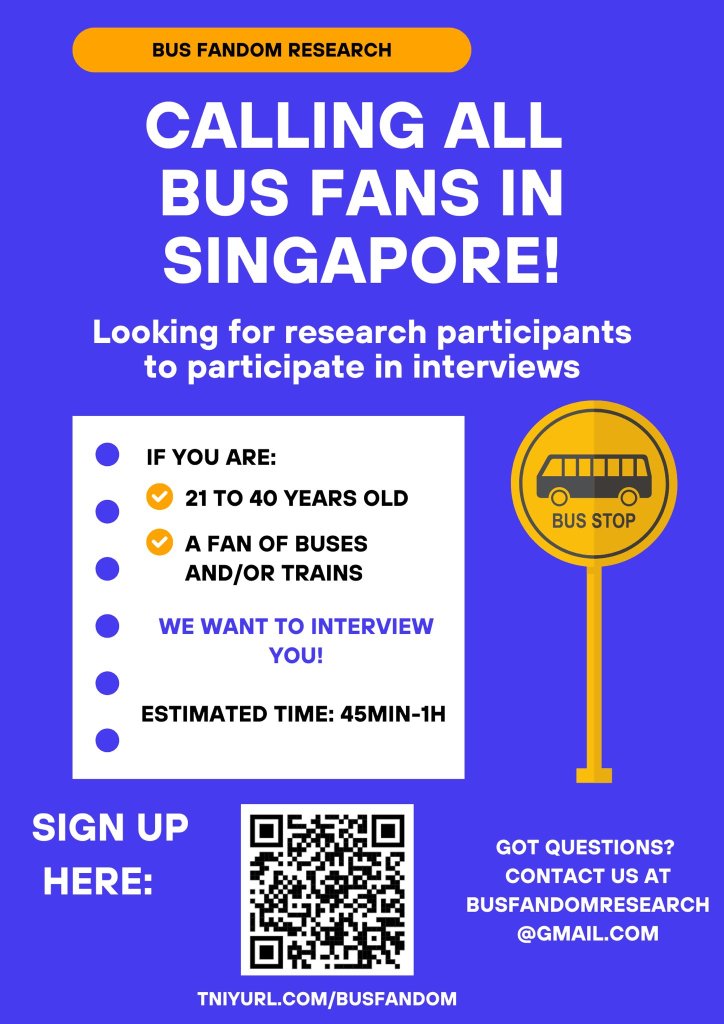
Led by Dr. Sneha Annavarapu (National University of Singapore), this study, “Bus Fandom in Singapore” explores the practices, desires, and experiences of bus fans. Bus Fans are people who devote significant time and attention to buses and trains like the Mass Rapid Transit (MRT).
Although bus fans are not particular to Singapore (they also exist in several other parts of the world), we examine how they understand their relationship to buses, and how they navigate the stigma of bus fandom: what kinds of desires and aspirations do bus fans have? How do they participate in urban life? What does social media offer in terms of a platform of community and/or visibility for this subcultural community? Based on interviews with bus fans, we think about transport infrastructure as social, affective, and an aesthetic project produced and reproduced by the state and citizens.
Grants that have supported Bus Fandom in SG:
2024
Yale-NUS Seed Grant for “Bus Fandom in Singapore: A Cultural Study of Public Transport” (PI: Sneha Annavarapu)
NUS FASS Start-Up Grant (PI: Sneha Annavarapu)
Ongoing presentations on this are:
Ho, Michelle H. S. and Sneha Annavarapu. 2025. “’What’s love got to do with it?’ Bus fandom, social media, and world-making in Singapore.” Inter-Asia Cultural Studies (IACS) Conference, Nakhon Si Thammarat, Thailand, July 23-25. In “Fandom, Media, and Popular Cultures in Global Asias I & II,” a double panel co-organized with Sneha Annavarapu (NUS/Yale-NUS College).
Ho, Michelle H. S. and Sneha Annavarapu. 2025. “’What’s love got to do with it?’ Bus fandom, social media, and world-making in Singapore.” AAS-IN-ASIA Annual Conference, Kathmandu, Nepal, June 1-4.
Participant Recruitment
 Michelle H. S. Ho